
Keep AI Out Back, Not Out Front: Why Your Business Should Think Twice About AI-Generated Marketing

Artificial intelligence can be an incredible tool for your business. But just because AI can create your marketing doesn't mean it should.
By Grace Williams Creative Group
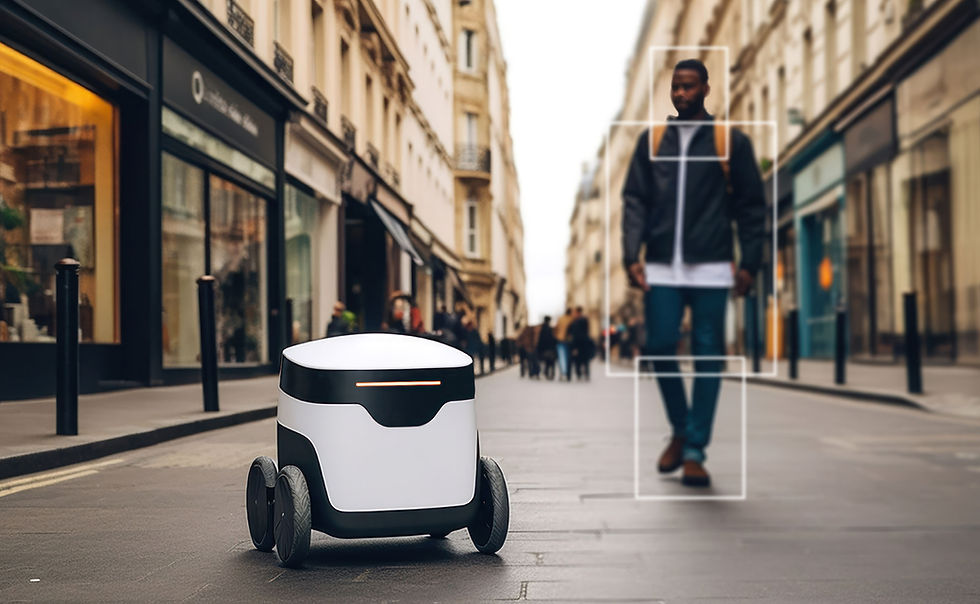
Artificial intelligence is changing the way businesses operate. From researching competitors and organizing information to brainstorming ideas and streamlining administrative tasks, AI offers remarkable opportunities to save time, reduce costs, and improve efficiency.
At Grace Williams Creative Group, we see tremendous value in these tools. We use them, we appreciate them, and we believe they're here to stay.
But we're also seeing a troubling trend.
Businesses are increasingly allowing artificial intelligence to become the public face of their brands. AI-generated graphics, automated social media posts, synthetic imagery, and machine-written advertisements are flooding our feeds.
And consumers are starting to push back.
Our advice to businesses is simple:
Use AI out back. Be human out front.
It's a distinction that could make an enormous difference in how customers perceive your business.
The Back Office Is Where AI Shines
Think about how a successful restaurant operates.
Behind the scenes, there's an entire operation that customers rarely see. Inventory management, scheduling, bookkeeping, ordering, and preparation all work together to deliver a great experience.
Your customers don't necessarily care how efficiently you manage your inventory. They care about the meal, the service, and the experience.
Marketing works much the same way.
AI can be an extraordinary asset behind the scenes. It can help businesses research markets, analyze data, organize campaigns, develop strategies, brainstorm concepts, and simplify repetitive administrative work.
Used thoughtfully, these tools free up valuable time that business owners and marketing professionals can dedicate to creativity, customer relationships, and the things that actually differentiate their brands.
That's AI working out back.
The trouble begins when businesses decide that because AI can do the behind-the-scenes work, it should also handle everything their customers see.
Your Customers Can Spot AI Marketing. And They're Getting Tired of It.
You've probably seen the signs.
A social media post filled with enthusiastic declarations, excessive emojis, and strangely polished language that somehow manages to say very little.
A promotional graphic featuring glowing backgrounds, impossibly perfect people, floating objects, and enough visual elements to fill three advertisements.
A business announcement that sounds suspiciously like every other business announcement on Facebook.
Or a blog post that uses hundreds of words to communicate what a thoughtful human writer could explain in a few paragraphs.
AI-generated marketing has developed a recognizable aesthetic.
The graphics are often unnecessarily busy. The language can be overly enthusiastic. The messaging tends toward generic positivity rather than meaningful communication.
And perhaps most importantly, the content frequently lacks the personality that makes a business memorable.
Of course, not every AI-generated image looks artificial, and not every AI-assisted post is obvious. The technology continues to improve.
But that's almost beside the point.
When your marketing looks and sounds like everyone else's AI-generated marketing, you're sacrificing the very thing your advertising is supposed to establish: your identity.
The Consumer Backlash Is Real, and the Numbers Should Concern Business Owners
This isn't simply a matter of personal taste. Research suggests that consumers are becoming increasingly skeptical of artificial intelligence in brand communications.
A March 2026 report from Gartner found that 50% of U.S. consumers would prefer to give their business to brands that avoid using generative AI in customer-facing content.
The same research found that 68% of consumers frequently question whether the content and information they encounter is real.
Think about that for a moment.
Half of the consumers surveyed expressed a preference for businesses that avoid AI-generated customer-facing content.
That's a substantial audience to potentially alienate simply because a business wanted to save time producing a Facebook advertisement.
Another study, released by WordPress VIP in June 2026, found that 60% of consumers consider AI in a brand's messaging a turnoff.
Additionally, 86% reported that they always or sometimes check original sources after receiving an AI-generated summary.
While this research doesn't mean consumers reject every business that uses AI, it does demonstrate a growing concern about authenticity, credibility, and the role technology plays in the information people encounter.
For business owners, the implication is worth considering.
You may be saving a few dollars by automating your marketing, but what happens if the resulting content makes potential customers trust your brand a little less?
AI Graphics: When More Becomes Less
One of the most noticeable problems with AI-generated marketing involves visual design.
Traditional graphic design is about making deliberate choices.
A good designer considers composition, visual hierarchy, typography, color, negative space, and the specific message an advertisement needs to communicate.
Every element should serve a purpose.
AI image generators, meanwhile, often produce graphics that are visually impressive at first glance but lack the restraint that makes effective advertising work.
The result can be an explosion of visual information.
Glowing effects. Elaborate backgrounds. Excessive textures. Decorative flourishes. Multiple competing focal points.
Everything is fighting for attention.
But effective marketing isn't about showing customers everything you possibly can.
It's about helping them understand one important thing.
A successful advertisement doesn't need to demonstrate how much creativity you can fit into a rectangle. It needs to communicate a message.
Sometimes the most effective design is a beautiful photograph, a compelling headline, and a clear call to action.
The goal isn't to impress people with the complexity of your graphics.
It's to get them interested in your business.
The Emoji Problem: When Every Business Starts Sounding the Same
AI-generated social media copy has its own set of recognizable characteristics.
Consider a hypothetical post promoting a local restaurant:
"🍕✨ Craving something DELICIOUS? 😍🔥 We've got you covered! 🙌 From mouthwatering flavors to unforgettable experiences, every bite is a celebration! 🎉🍽️ Stop in today and treat yourself! ❤️"
Does that sound familiar?
There's nothing inherently wrong with emojis. Used sparingly and appropriately, they can add personality and warmth to social media content.
But excessive enthusiasm, formulaic language, and generic descriptions are becoming hallmarks of low-effort AI marketing.
Notice something else about that example.
It doesn't actually tell you anything about the restaurant.
What makes its pizza special? Is the dough made fresh? Is it a family business? Does it have a signature dish? Is there a special running this week?
Those are the details that make marketing valuable.
Instead, we're left with a collection of excited adjectives that could describe virtually any restaurant in America.
Your customers don't need your business to sound enthusiastic. They need your business to sound authentic.
And authenticity comes from knowing your customers, understanding your business, and having something meaningful to say.
The Hidden Cost of Looking Artificial
One of the biggest selling points of AI-generated marketing is affordability.
Why pay a graphic designer, photographer, writer, or marketing professional when a software subscription can produce content in seconds?
It's an understandable question, particularly for small businesses operating on tight budgets.
But it overlooks something fundamental.
The cost of producing marketing isn't nearly as important as the results that marketing produces.
Imagine a business saves $300 a month by replacing professionally developed content with automatically generated social media posts.
On paper, that looks like a smart financial decision.
But suppose the new content becomes increasingly generic. Engagement drops. Potential customers begin scrolling past the posts. The business loses some of the personality that originally made it appealing.
Even a modest decline in customer acquisition could quickly erase those savings.
And unlike an advertising expense, the cost of diminished trust isn't always easy to measure.
People rarely contact a business to explain that they're no longer interested because its marketing feels artificial.
They simply move on.
That doesn't mean every use of AI in marketing damages a brand. It means businesses need to evaluate AI-generated content by its actual effectiveness, not merely its production cost.
Saving money on marketing that doesn't work isn't saving money.
People Still Want to Do Business With People
For small and locally owned businesses, this issue is particularly important.
Your greatest advantage over a national chain or enormous online competitor may be the personal connection you have with your community.
Your customers know your name.
They recognize your employees.
They appreciate seeing genuine photographs of your business, hearing about your accomplishments, and learning about the people behind your products and services.
These are things that AI can't authentically manufacture.
It can generate an image of a smiling restaurant owner standing in a beautiful kitchen.
But it can't replace an actual photograph of the owner who has spent twenty years serving the community.
It can write a heartfelt message thanking customers for their support.
But without meaningful human involvement, it may miss the personal experiences and genuine appreciation that make such a message resonate.
It can create an impressive promotional video.
But it can't substitute for real footage that documents the people, places, and experiences that define your business.
The things that make your business uniquely yours are precisely the things your marketing should emphasize.
Don't allow generic, machine-generated content to bury them.
There's a Difference Between Using AI and Letting AI Represent You
We want to be clear about something.
This isn't an argument against artificial intelligence.
It's an argument for using it intelligently.
There's a significant difference between asking AI to help brainstorm ideas for a marketing campaign and asking it to create and publish the entire campaign without meaningful human involvement.
There's a difference between using AI to organize research for a blog post and publishing an unedited article that lacks a distinct perspective.
There's a difference between using AI to help plan a video production and replacing actual footage of your business with synthetic images of people and places that don't exist.
And there's a difference between using AI to assist a talented graphic designer and allowing a generated image to become the finished advertisement without considering whether it communicates effectively.
AI can absolutely contribute to customer-facing creative work. The important distinction is whether humans remain responsible for the message, the quality, the accuracy, and the final presentation.
In situations where AI-generated material is used, appropriate transparency matters, particularly when synthetic imagery could misrepresent a product, person, or experience.
The question shouldn't be, "Can AI do this?"
It should be, "Will using AI make this better for our customers?"
If the answer is no, perhaps that's a job better left to a human.
A Simple Rule for Your Business: Out Back or Out Front?
Before implementing AI into your marketing process, consider where it belongs.
Out Back: Let AI Help You Work Smarter
Use AI to support research, organize ideas, analyze marketing performance, develop campaign outlines, simplify workflows, and handle repetitive tasks.
Let it make your team more efficient.
Let it help you find opportunities.
Let it give you more time to focus on your customers.
Out Front: Let Your Business Be Human
Use genuine photography whenever possible.
Create graphics that reflect your actual brand rather than the latest AI-generated visual trend.
Write social media posts that sound like your business, not a chatbot.
Feature real employees, real customers (with their permission), and real experiences.
Create video content that captures the personality and atmosphere of your organization.
And above all, communicate with your audience in a way that feels personal, honest, and worth their attention.
The distinction doesn't have to be absolute. AI-assisted work can make its way into finished marketing when it genuinely improves the result.
But the finished product should always meet the same standard you would expect from professional, human-created content.
Technology should support your brand, not become your brand.
The Future of Marketing May Be More Human Than We Think
As artificial intelligence becomes more sophisticated and more accessible, businesses will find it increasingly easy to produce enormous quantities of marketing content.
But quantity has never been a substitute for quality.
And accessibility doesn't automatically create originality.
When virtually anyone can generate a polished advertisement in seconds, the ability to produce something polished becomes less of a competitive advantage.
What becomes more valuable?
Original ideas.
Genuine experiences.
Recognizable personalities.
Compelling storytelling.
And the trust that develops when customers believe they're interacting with a real business run by real people.
Ironically, the more AI-generated content fills our feeds, the more distinctive authentic, human-centered marketing may become.
At Grace Williams Creative Group, we believe businesses should embrace tools that help them operate more effectively.
But we also believe marketing should preserve the unique character of the businesses it represents.
We don't need to reject AI to recognize the importance of human creativity.
We simply need to remember which one our customers came to see.
So put AI to work out back.
And put your best, most authentic self out front.
About Grace Williams Creative Group
Grace Williams Creative Group helps businesses and nonprofit organizations tell their stories through thoughtful marketing, professional video production, graphic design, digital advertising, and social media management.
We believe effective marketing begins with understanding the people behind a business and the customers they serve.
Because great marketing shouldn't just look professional.
It should feel personal.
Visit GraceWilliamsCreative.com to learn more about our services.


Comments